
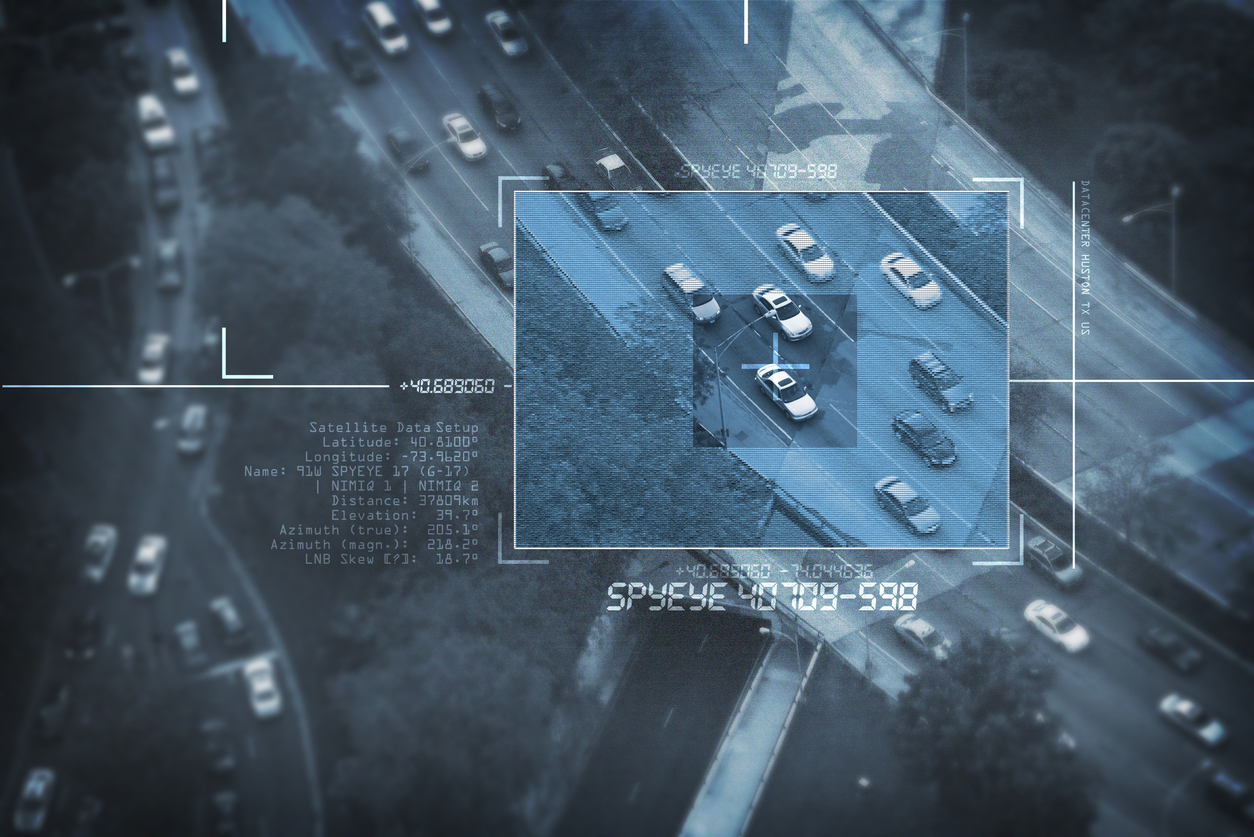
A claimant swears they live at the address on their policy. They insist their vehicle is garaged in a low-risk zip code. They claim the damage to their car happened on the date of loss. But what if their license plate tells a completely different story?
Welcome to the world of Vehicle Sightings Reports—a powerful investigative tool that's revolutionizing how SIUs detect fraud, verify information, and build bulletproof cases against dishonest claimants.
What Is a Vehicle Sightings Report?
A Vehicle Sightings Report leverages automated license plate recognition (ALPR) technology deployed across thousand sof locations nationwide. Every time a vehicle passes one of these cameras, the system captures and records:
- Exact address of the sighting
- GPS coordinates for precise location verification
- Date and time stamps down to the second
- Photographic evidence of both the license plate and vehicle
- Frequency patterns showing how often the vehicle appears at specific locations
- First and last seen dates establishing timelines
This data is compiled into comprehensive reports that provide SIU professionals with objective, irrefutable evidence of where a vehicle has actually been—not where the claimant claims it's been.
The Fraud Schemes Vehicle Sightings Reports Expose
Auto Insurance Rate Evasion
This is perhaps the most common application of Vehicle Sightings Reports. Rate evasion occurs when policy holders deliberately misrepresent where they live or where their vehicle is garaged to secure lower premiums.
The scenario: A driver claims to live in a suburban area with low insurance rates but actually resides in an urban area with significantly higher rates. The annual premium difference can be thousands of dollars.
How Vehicle Sightings Reports expose it: License plate data shows the vehicle is consistently sighted overnight at an address different from the one on the policy. The sightings occur at times (late evening through early morning) that clearly indicate residential garaging rather than occasional visits.
The data doesn't lie. If a vehicle is captured at the same urban address five nights a week between 10 PM and 7 AM over a three-month period, no amount of creative explanation can convince an examiner that the policyholder really lives in the suburbs.
Pre-Existing Damage Fraud
Claimants filing first-party collision or comprehensive claims sometimes attempt to include pre-existing damage in their loss.
The scenario: A vehicle sustains minor damage in an unreported incident. Weeks or months later, the vehicle is involved in a legitimate accident, and the claimant attempts to have all damage—both old and new—repaired under the current claim.
How Vehicle Sightings Reports expose it: Historical vehicle photographs captured at various sightings can show damage that existed prior to the reported date of loss. If sightings from two weeks before the claim show the same dent or scrape visible in the current damage estimate, you've caught the fraud.
Address Verification and Household Composition
Insurance rates are calculated based on household composition, including the number of drivers and vehicles at a residence. Claimants sometimes conveniently "forget" to mention additional drivers or vehicles to keep premiums lower.
How Vehicle Sightings Reports expose it: Reports can identify multiple vehicles regularly appearing at the same address, revealing undisclosed vehicles or drivers. If the policy lists one vehicle but sightings show three different license plates regularly captured at the insured address, that's a red flag worth investigating.
Workers' Compensation Investigations
An injured worker claims to be homebound with limited mobility, yet their vehicle tells a different story.
How Vehicle Sightings Reports expose it: Tracking data reveals the claimant's vehicle is sighted across town regularly, visiting locations inconsistent with their claimed limitations. Sightings at gyms, construction sites, or other employment locations can directly contradict disability claims.
Subject Location and Activity Patterns
When you need to locate a subject for service of process, interviews, or surveillance, knowing where they actually spend their time is invaluable.
How Vehicle Sightings Reports help: By analyzing patterns in sighting data, investigators can identify:
- The subject's actual residence (even if different from the address on file)
- Their workplace location and typical work hours
- Routine stops and regular destinations
- Best times and locations for surveillance or contact attempts
The Strategic Advantages for SIU Operations
Objective, Defensible Evidence
License plate data is objective and timestamped. There's no ambiguity, no "he said, she said," and no way for a claimant to talk their way around photographic evidence with GPS coordinates and precise timestamps. This evidence is particularly powerful in:
- Claim denials that may face litigation
- Special Investigation Unit referrals to law enforcement
- Suspicious claim reports to the National Insurance Crime Bureau (NICB)
Rapid Investigation Turnaround
Vehicle Sightings Reports can provide actionable intelligence within days. This accelerated timeline means:
- Faster claim resolution
- Reduced loss adjustment expenses
- Quicker identification of fraudulent patterns
- More efficient allocation of investigative resources
Pattern Recognition Across Multiple Claims
Vehicle Sightings data can reveal patterns that indicate organized fraud rings. If multiple claimants involved in related accidents show vehicles regularly sighted at the same address, you maybe looking at a staged accident operation.
Implementing Vehicle Sightings Reports in Your SIU Operations
Consider ordering a Vehicle Sightings Report when:
- Address discrepancies appear during claim investigation
- Premium amounts seem inconsistent with known risk factors
- Pre-existing damage is suspected
- Subject location is needed for surveillance or service
- Multiple vehicles or drivers may be associated with a single address
- Organized fraud is suspected based on claim patterns
Vehicle Sightings Reports work best as part of a comprehensive investigative strategy. Combine them with:
- Social media investigations to corroborate locations and activities
- Database searches to identify additional addresses and associates
- Physical surveillance to capture activity at locations identified in sighting data
- Statement analysis to identify inconsistencies with location claims
When using Vehicle Sightings Reports as evidence:
- Document the request parameters clearly: Show what you were looking for and why
- Analyze patterns, not isolated sightings: A single sighting may be explainable; consistent patterns are not
- Correlate with other evidence: Strengthen your case by showing how sighting data aligns with other investigative findings
- Present visually: Maps showing sighting locations and timelines are powerful presentation tools
- Be prepared to explain the technology: Ensure you can articulate how ALPR systems work and why the data is reliable
Privacy and Legal Considerations
ALPR technology operates in public spaces, capturing images of vehicles in plain view. The data is legally available for investigative purposes. However, SIU professionals should:
- Use the data for legitimate investigative purposes only
- Maintain appropriate security and confidentiality of reports
- Follow all applicable state and federal privacy regulations
- Be prepared to defend the investigative necessity if challenged
The Future of Vehicle Intelligence
ALPR technology and vehicle sighting databases continue to expand. More cameras, more locations, and increasingly sophisticated data analysis tools mean that Vehicle Sightings Reports will only become more powerful and comprehensive.
For SIU operations, this technology represents a fundamental shift in how fraud is detected and investigated. The days of relying solely on statements, documents, and expensive surveillance are evolving. Now, objective data tells the story—and vehicles can't lie about where they've been.
Taking Action
If your SIU isn't currently leveraging Vehicle Sightings Reports, you're missing critical intelligence that could save your organization thousands—or even millions—in fraudulent claim payouts. This tool is particularly valuable for:
- Large first-party auto claims where rate evasion is suspected
- Claims involving address discrepancies
- Investigations requiring subject location
- Cases where pre-existing damage is suspected
- Identifying patterns in potential organized fraud schemes
The question isn't whether you should use Vehicle Sightings Reports. It's whether you can afford to investigate claims without them.
Delta Group's Vehicle Sightings Report service delivers precise, actionable intelligence based on comprehensive license plate tracking and recording. Our reports include exact addresses, GPS coordinates, frequency of sightings, time-of-day patterns, and visual evidence—all designed to provide SIU professionals with the critical insights needed to detect fraud and verify information efficiently.
Contact Delta Group at info@deltagroup.net or call (800) 329-4143 to learn how Vehicle Sightings Reports can strengthen your investigations and protect your organization from fraudulent claims.





%20(1).webp)
.webp)